The Healing Waters: A Comprehensive Guide to the Onsen Experience in 2026
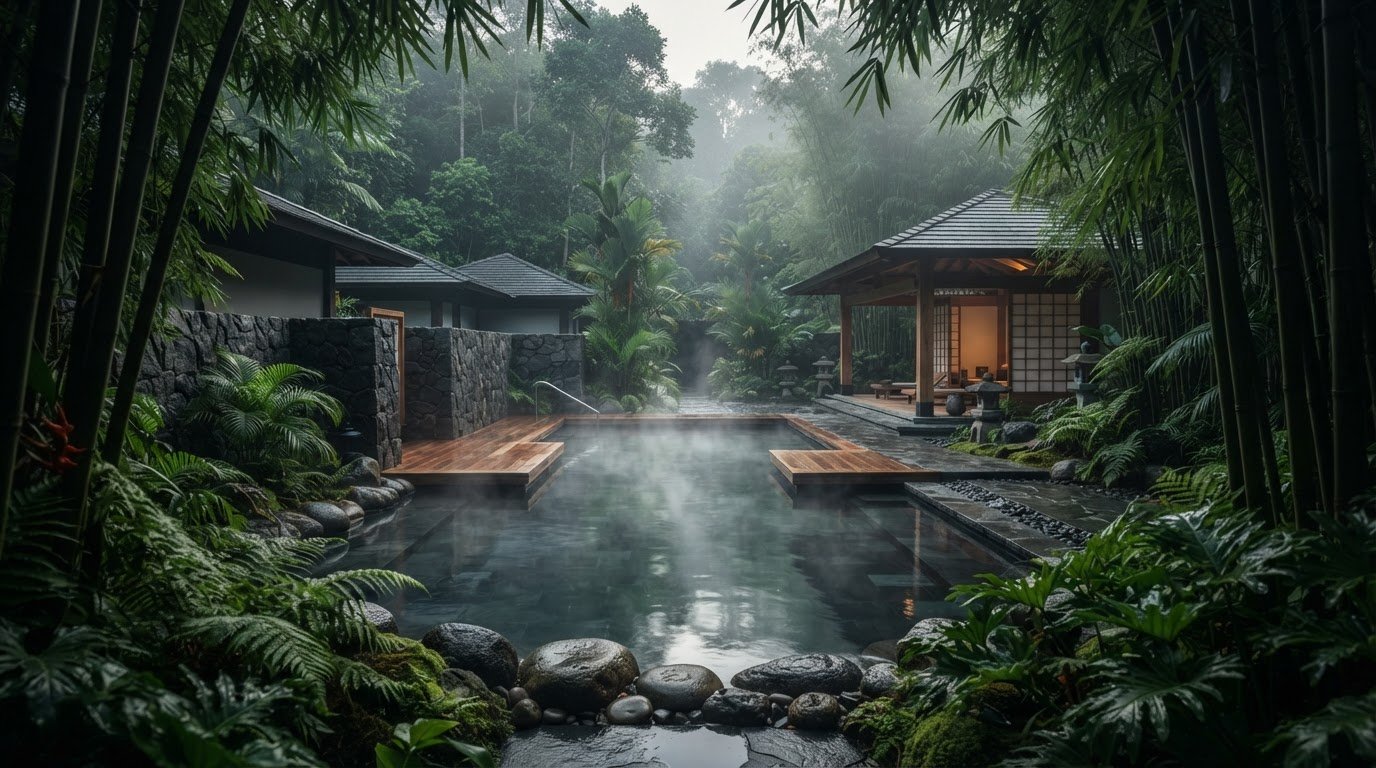
An authentic onsen is not merely a place to bathe. It is an intentional ritual of surrender, where warmth and mineral stillness become the ultimate remedy for an overstimulated life. If you spend your days carrying the weight of urban fatigue, tight shoulders, and an internal clock that refuses to slow down, you already know how elusive genuine quiet feels. Stepping into an unfamiliar thermal sanctuary can bring its own hesitations about customs, modesty, and correct etiquette.
You don't have to carry that uncertainty into the water. Discover how the restorative onsen ritual dissolves chronic muscle stiffness, calms a racing mind, and offers profound renewal through the simple gifts of heat and mineral peace. Ahead, we will guide you through the timeless bathing sequence step by step, explore the physical release of thermal immersion, and show you how to let yourself be completely nurtured by tradition.
Key Takeaways
- Understand how the philosophy of gentle ease transforms a simple soak into an intentional sanctuary ritual.
- Discover the restorative science behind hydrostatic pressure and thermal heat in soothing chronic muscle stiffness.
- Master traditional bathing etiquette with confidence, viewing each step as a mindful act of personal care.
- Learn how softening the body in an onsen bath prepares tight muscle tissue for deeper relief during Thai massage.
- Explore how an unhurried retreat environment helps release urban fatigue and restore your inner equilibrium.
Defining the Onsen: A Sanctuary Beyond the Bath
A simple hot bath serves a functional purpose. It cleanses the surface and warms chilly limbs. In contrast, an authentic onsen experience is an invitation to slow down entirely. The warmth acts as a gentle gateway, inviting tight muscles and racing thoughts into total surrender. Modern living constantly demands vigilance, keeping our senses on alert and our muscles contracted. A dedicated thermal sanctuary softens that tension. The heat cradles your body, creating a protected pocket of stillness where sensory fatigue dissolves and your internal clock resets.
Onsen vs. Sento: Understanding the Difference
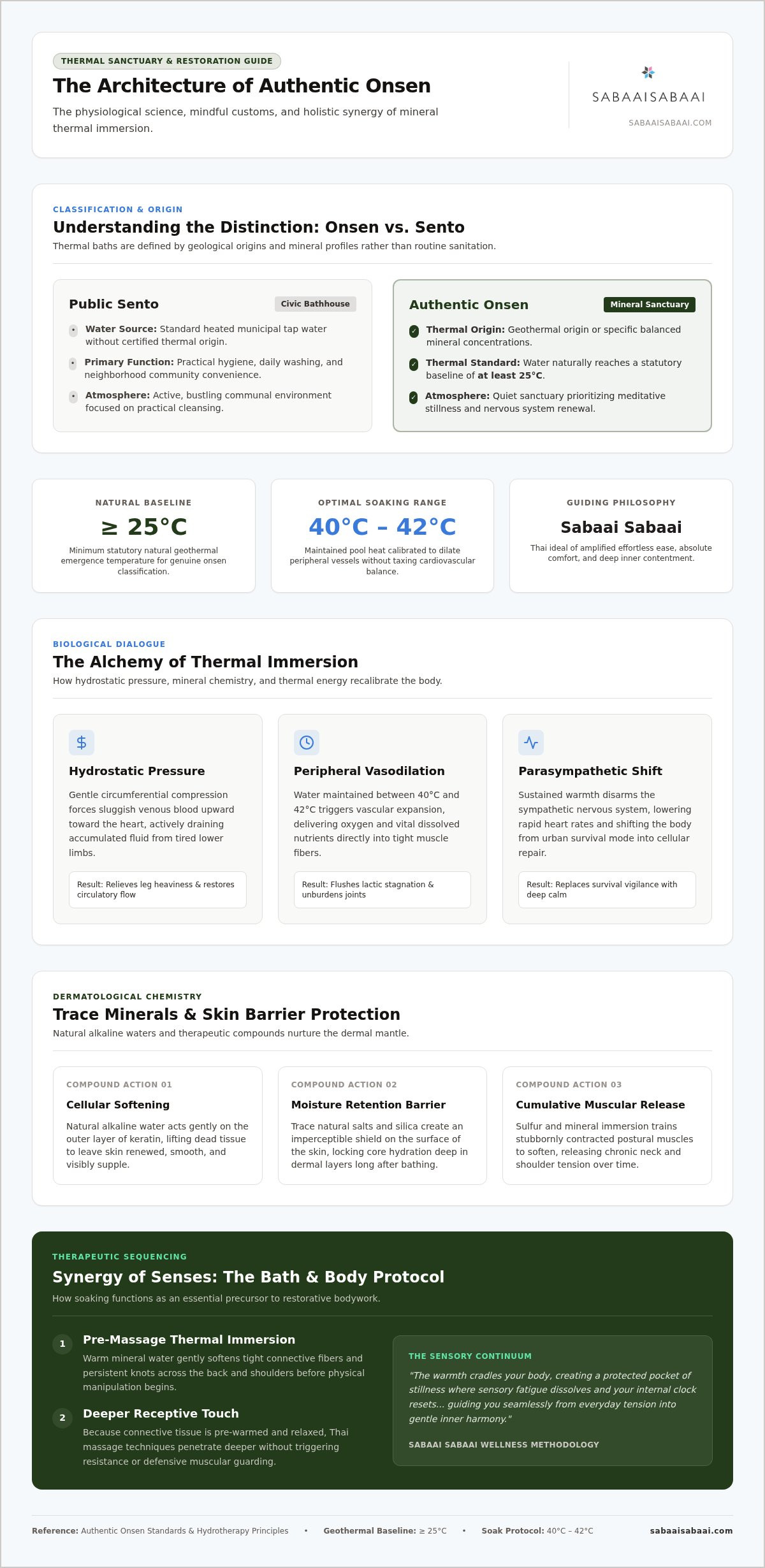
While public bathhouses known as sento prioritize neighborhood convenience and daily cleansing with heated tap water, a true thermal bath is defined by its restorative earth connection. The traditional Japanese onsen requires specific geothermal origins or carefully balanced mineral concentrations, alongside temperatures naturally reaching at least 25°C. The therapeutic value rests within this unique composition:
- Mineral enrichment: Elements like silica, sulfur, and natural salts nourish the skin barrier while retaining core body warmth.
- Atmospheric intention: A quiet sanctuary fosters mental tranquility, choosing contemplative calm over busy communal traffic.
- Subtle physical release: Rich mineral waters provide gentle buoyancy, effortlessly unburdening fatigued joints.
The Concept of 'Sabaai Sabaai' in the Water
The true essence of soaking extends beyond water chemistry; it is deeply emotional. In Thai philosophy, the word sabaai describes a state of effortless happiness, comfort, and ease. Doubling the word amplifies this feeling, inviting you into a state of absolute contentment and peace of mind.
As you sink beneath the surface, external noise falls away. The steady warmth holds you, signaling to your body that nothing more is required. Breath deepens. Shoulders drop. In this quiet, unhurried space, physical relief and emotional calm intertwine, guiding you seamlessly from everyday tension into gentle inner harmony.
The Alchemy of Restoration: How Onsen Heals the Body
Submerging into warm water initiates an immediate biological dialogue with your body. Natural hydrostatic pressure gently compresses the limbs, encouraging sluggish venous blood flow back toward the heart and soothing fluid accumulation in weary legs. Paired with water maintained at an optimal 40°C to 42°C, peripheral blood vessels expand, washing oxygenated nutrients into tight tissues. Simultaneously, the skin drinks in dissolved trace minerals that lock in moisture and nourish the dermal mantle. Beyond the physiological shift, water acts as an emotional filter, quietly dissolving the chronic sensory overload of modern city life.
Thermal Therapy and the Nervous System
Sustained warmth gently silences the sympathetic nervous system. The rapid pulse and shallow breathing of daily survival mode yield to deep parasympathetic ease. As heart rates steady, tight connective fibers loosen, softening stubborn knots along the neck and back so the body becomes receptive to therapeutic touch. Thermal restoration is the quiet recalibration of your body's internal clock through sustained, mineralized warmth.
To preserve this peaceful state, traditional Japanese hot spring etiquette encourages quiet contemplation and calm movement, protecting the thermal pool as an undisturbed sanctuary for restorative recovery.
Detoxification and Skin Health
Immersing yourself in mineral heat encourages skin to breathe freely. Gentle perspiration clears congested pores, while natural salts and alkaline compounds work in harmony to nurture the body:
- Cellular softening: Alkaline water softens the outer layer of keratin, leaving dry skin visibly supple and renewed.
- Moisture retention: Mineral salts create a delicate barrier on the skin's surface, helping retain core hydration long after stepping out.
- Cumulative muscular release: Regular thermal bathing trains contracted muscles to release chronic postural strain, creating lasting freedom of movement.
When you allow yourself to sink into this peaceful retreat, physical recovery ceases to be an effort. It becomes an act of gentle surrender. If your body is ready to release the weight of accumulated fatigue, discovering a private curated onsen bath session offers an intentional space to begin that renewal.
Mastering the Ritual: A Gentle Guide to Onsen Etiquette
Traditional bathhouse customs are often misunderstood as rigid regulations. In truth, they are simple acts of shared mindfulness. Every gesture exists to protect your personal peace and honor the quiet restoration of those around you. Entering an authentic onsen unclothed can feel intimidating at first, but this simplicity creates a gentle anonymity. In the water, social roles, professions, and external pretenses fall away. Everyone enters the space on equal terms, united by the same humble intention: to rest.
The pre-soak wash is far more than practical hygiene. Sitting at the low wooden station, slowly pouring water over your skin, offers a symbolic shedding of the day. As water washes away urban grit, it also washes away deadlines, conversations, and mental clutter. You leave the residue of the outside world behind before stepping into the pristine warmth.
The Step-by-Step Path to Release
Approaching the bath with an unhurried cadence transforms immersion into a restorative ritual:
- The preparatory rinse: Ladle warm water over your feet, knees, and shoulders. This gentle gesture signals to your heart and circulatory system that warmth is approaching.
- The gradual descent: Lower yourself smoothly into the water up to the chest, keeping your breath slow and even as your body acclimates.
- The cooling interval: After ten or twelve minutes, rest on the poolside bench. Allowing the cool air to calm your pulse is where deep cellular stillness takes root.
Mindful Presence in the Sanctuary
True quiet requires protecting the space from outside noise. Leaving digital devices in your locker seals the boundary between daily urgency and emotional stillness. Move with intention, stepping gently to keep the surface of the pool undisturbed. Keep voices to a soft whisper, or surrender completely to silence. When you stop rushing and release the need to perform, self-consciousness dissolves, replaced by a grounded feeling of being nurtured by centuries of tradition.
Synergy of Senses: Pairing Onsen with Thai Massage
Thermal immersion begins a process of unwinding that hands-on bodywork completes. While thermal water warms the body from the outside in, therapeutic touch works deep into the muscle fiber itself. Experiencing an onsen bath before bodywork turns two separate rituals into a cohesive healing journey. Tight shoulders let go. Shortened hamstrings lengthen without resistance. By the time you step onto the treatment mat, your body has already done the heavy lifting of shedding its protective armor.
The Softening Phase: Preparing the Fascia
Fascia, the continuous web of connective tissue wrapping every muscle, behaves like chilled honey when cold. It stiffens, restricts movement, and locks chronic tension in place. Immersion in thermal water raises tissue temperature, turning dense connective bands pliable and yielding. This pre-warming phase transforms the entire massage experience:
- Reduced tissue resistance: Softened muscles allow therapists to access deeper layers without using sharp, forceful pressure.
- Enhanced circulation: Dilated vessels quickly clear metabolic waste released during deep compressions.
- Minimized post-treatment soreness: Pre-warmed joints and tendons undergo passive manipulation with significantly less residual tenderness the next day.
The Integration Phase: Thai Stretching and Aromatherapy
This biological receptivity creates the ideal foundation for the rhythmic stretching of Traditional Thai Massage. Often described as passive yoga, traditional bodywork uses gentle rocking, acupressure along energy pathways, and assisted stretches. Because your muscles are already warm, limbs move through wider arcs of motion with total ease. Breath syncs effortlessly with each stretch.
For those seeking sensory gentleness alongside physical relief, moving from the warm waters into an aroma oil massage delivers exceptional nourishment. Heat expands the pores and boosts dermal blood flow, allowing therapeutic essential oils to absorb deeply into freshly cleansed skin. The calming scents soothe mental fatigue, while smooth, flowing strokes ground your awareness back in the present moment.
Taking this unhurried path from bath to treatment table offers the deepest release modern wellness can provide. To experience how warm mineral waters elevate therapeutic touch, reserve an onsen bath and massage package and give your body the complete restoration it deserves.
Finding Your Sanctuary: The Sabaai Sabaai Experience
Stepping across the threshold of a true retreat means leaving the relentless pace of urban life behind. The air shifts. Muted ambient tones replace the hum of traffic, and the gentle scent of botanical oils signals that your daily obligations have ended. Here, meticulous attention to detail guides every design choice. From the natural warmth of timber surfaces to the carefully curated onsen baths, every element creates a peaceful retreat where you can pause. Our practitioners guide you through your journey with gentle attentiveness, ensuring you feel held and supported. When you return to the world outside, that deep sense of grounded tranquility remains rooted within you.
Your Nurturing Guide to Wellness
Our sanctuary weaves time-honored Thai heritage with modern standards of comfort. We treat every guest as a traveler seeking personal restoration, recognizing that each body carries a distinct pattern of fatigue:
- Sensory stillness: Soft, indirect lighting and calming botanical aromas invite your senses to unwind the moment you arrive.
- Rhythmic peace: Every movement between private bathing spaces and treatment rooms flows with an unhurried cadence.
- Devoted expertise: Highly trained practitioners listen to your body's subtle cues, tailoring traditional body massage and targeted touch to dissolve lingering knots.
Begin Your Journey Toward Release
Preparing for your first visit requires nothing more than a willingness to slow down. Arriving a few moments early allows you to slip out of your shoes, take a quiet breath, and leave external distractions at the door. If you wish to extend this restorative comfort to friends or family carrying the weight of a busy season, our gift vouchers offer a heartfelt way to share the gift of unhurried rest.
The onsen stands as the quiet authority of self-care, proving that true restoration begins the moment you give yourself permission to surrender to stillness.
Step Into the Warmth: Begin Your Personal Restoration
Reclaiming peace is simple when you honor the wisdom of warm water. The traditional onsen is far more than an escape from daily pressure; it is a mindful return to yourself. By allowing hydrostatic warmth to release tension and pairing that stillness with rhythmic bodywork, your body naturally remembers what effortless ease feels like.
We invite you to leave the city's noise at the door. Our serene, guest-centric sanctuary blends authentic Thai wellness expertise with thoughtful care. Guided by professional practitioners dedicated to your restoration, every step of your visit is shaped around personal comfort. When you are ready to let tired muscles soften and your mind quiet down, book your restorative onsen experience at Sabaai Sabaai.
Give yourself permission to pause. Step into the mineral embrace, breathe deeply, and welcome the restorative calm waiting just beneath the surface.
Frequently Asked Questions
What should I bring with me to an onsen session?
You don't need to pack heavy bags, as a curated sanctuary provides essential amenities like fresh towels, bathrobes, and botanical body cleansers. You only need to bring comfortable undergarments or a change of clothes to wear afterward. It's also helpful to bring a hair tie if you have long hair. Leaving jewelry and digital watches in your locker preserves both their delicate materials and your personal peace.
Is it safe to go into an onsen if I have high blood pressure?
Consult your physician first if you have diagnosed cardiovascular concerns or take blood pressure medication. Immersing yourself in warm water naturally expands blood vessels and shifts heart rate, which can lead to lightheadedness. If cleared by your doctor, keep soaks gentle by immersing only up to the waist, sipping cool water throughout, and stepping out immediately if you feel dizzy or overheated.
How long should I stay in the hot water to get the maximum benefit?
Ten to fifteen minutes per soak is the ideal duration to encourage full muscular relaxation without causing physical fatigue. Prolonged exposure to temperatures around 40°C can overtax your circulatory system and deplete your hydration. Stepping out to rest on a poolside bench allows your body to regulate its temperature, ensuring that every minute spent in the water feels completely restorative.
Can I enjoy an onsen bath if I have tattoos?
Yes, you can comfortably enjoy bathing with tattoos, especially in modern sanctuaries or private suites. While traditional communal bathhouses historically maintained strict house rules regarding ink, contemporary wellness spaces prioritize personal comfort and inclusivity. Choosing a private onsen bath session ensures complete privacy, letting you soak peacefully without worrying about covering body art or navigating communal restrictions.
What is the difference between an onsen and a traditional sauna?
An onsen relies on warm, mineral-rich water to combine heat with soothing hydrostatic pressure, while a sauna uses dry ambient air or steam to raise core temperature. Water envelops the body, gently lifting the weight off tired joints through natural buoyancy. While both encourage healthy perspiration, mineral baths offer skin-softening benefits and deep fascial release that dry heat alone cannot replicate.
How many times should I soak during a single visit?
Two to three gentle soaks, punctuated by cool resting intervals, provide the deepest balance of recovery and ease. Entering the water once allows your body to warm up, while a second immersion draws you into profound relaxation. Always listen to your body's signals rather than counting cycles. Resting with a refreshing drink between immersions keeps your nervous system calm and grounded.
Is it better to have a massage before or after the onsen bath?
It is best to soak before your massage to maximize therapeutic results. Warm mineral water increases blood circulation, calms the nervous system, and softens tight muscular fascia. By the time you move to the treatment table, your tissues are pliable and receptive, allowing techniques like traditional Thai massage or an aroma oil massage to release deep chronic tension without unnecessary strain.
Is the onsen water hygienic for everyone?
Yes, strict sanitation rituals and filtration ensure pristine water quality for every bather. Traditional bathing etiquette requires everyone to wash thoroughly at cleansing stations before entering the bath, keeping lotions, oils, and surface impurities out of the pool. In private bath sanctuaries, water is continuously monitored, filtered, and refreshed, providing a clean, safe haven where you can let go with absolute peace of mind.