Massage for Muscle Tension Singapore: Holistic Relief
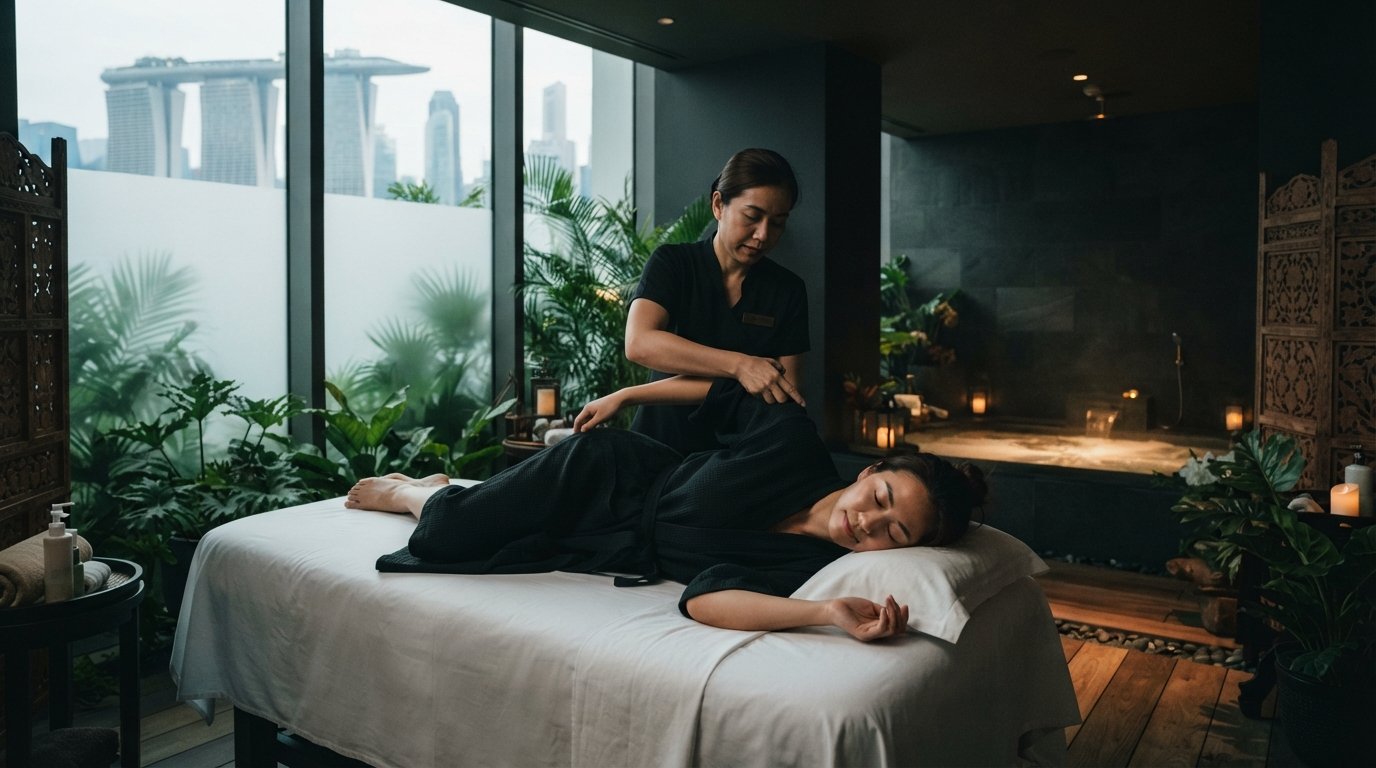
Did you know that over 73% of office workers in Singapore carry persistent musculoskeletal pain, often feeling as though a 27kg weight is pressing down on their neck while they work? It's a heavy, invisible burden. It turns a standard day at the desk into an exhausting marathon of stiffness and interrupted sleep. You likely recognize the sensation of shoulders that feel permanently raised or a back that feels physically blocked by the day's pressure. Finding a dedicated massage for muscle tension Singapore provides is no longer just a luxury. It is a vital step toward reclaiming your physical and emotional space.
We believe that true relief requires more than a temporary fix. It asks for a sanctuary where the clock slows down and the body finally feels heard. In this guide, you'll discover how the rhythmic art of Thai stretching and the deep warmth of an onsen bath work in harmony to melt away stubborn knots. We will preview the journey from chronic discomfort to mental clarity, showing you how traditional rituals can become a sustainable anchor for your urban lifestyle. Prepare to let go of the heaviness and rediscover a body that feels light, fluid, and entirely your own.
Key Takeaways
- Understand how the unique pressures of the Singapore lifestyle contribute to chronic semi-contraction and the physical burden of "tech neck."
- Discover why a specialized massage for muscle tension Singapore practitioners provide uses a rhythmic blend of stretching and pressure to release deep-seated knots.
- Learn how thermal rituals, such as a private onsen bath, can soften muscle fibers and prepare your body for a more effective restoration.
- Identify the ideal technique for your specific discomfort, moving away from the "pain equals gain" myth toward a more harmonious healing process.
- Explore how integrating traditional Thai wisdom into your routine creates a sustainable sanctuary for both physical relief and mental clarity.
Understanding Muscle Tension in an Urban Environment
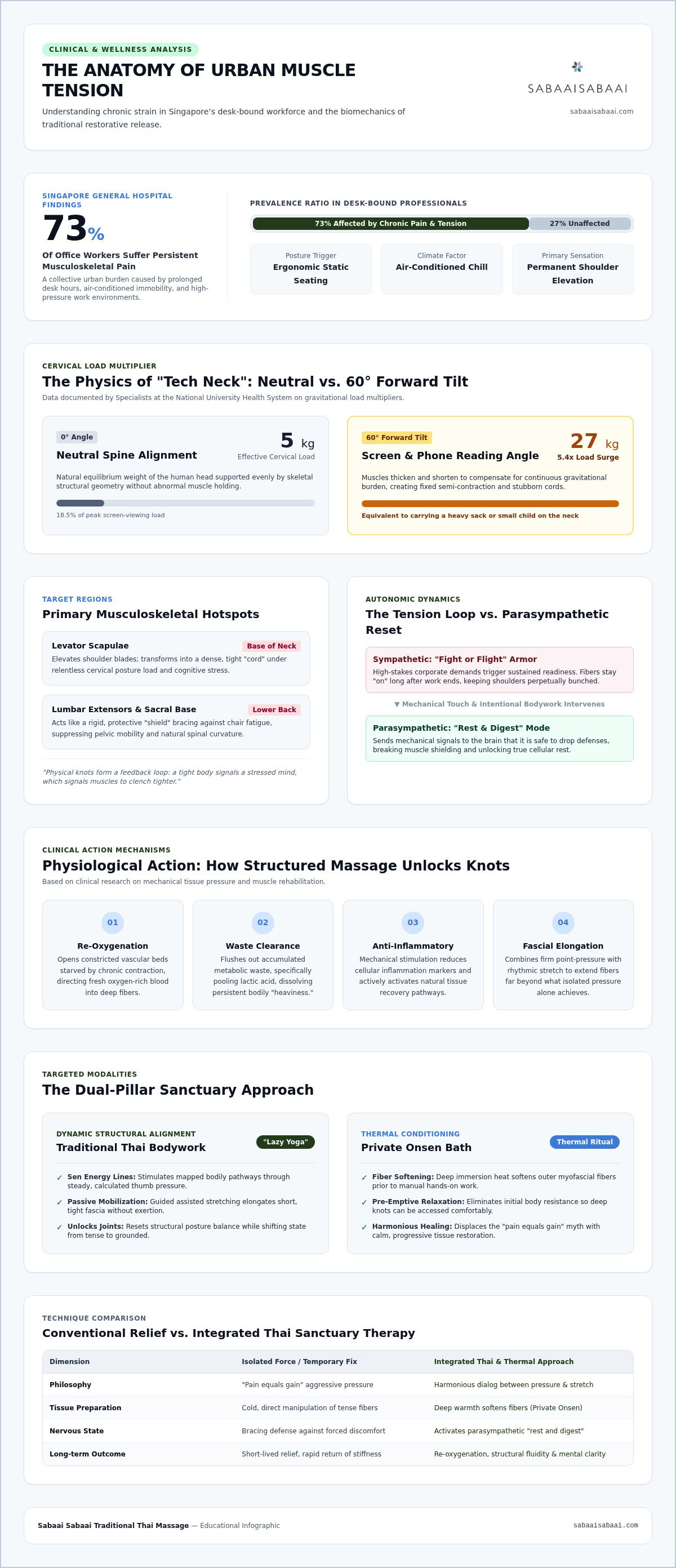
In the heart of our vibrant city, the body often carries an unspoken story of stress. Muscle tension isn't just a fleeting ache; it's a state of semi-contraction where your fibers remain "on" long after the workday ends. For many seeking a massage for muscle tension Singapore offers a necessary pause from the relentless pace of urban life. This physical holding is often born from the quiet rigors of our local lifestyle: long hours spent in ergonomic chairs, the subtle chill of air-conditioned offices, and high-pressure environments that keep our minds racing. According to the Singapore General Hospital, over 73% of office workers here experience this type of musculoskeletal pain, proving that stiffness is a collective urban experience.
This tension tends to settle in specific hotspots. The levator scapulae at the base of your neck becomes a tight cord, while your lower back feels like a rigid shield. Eventually, these physical knots create a feedback loop. A tight body signals a stressed mind, which in turn causes the muscles to clench even tighter. This cycle leads to a persistent sense of mental fatigue and physical heaviness. Exploring various massage therapy modalities helps break this cycle, inviting the body to remember its natural state of fluidity and grace.
What is 'Tech Neck' and Why Does it Persist?
When you tilt your head forward to check a notification or scroll through a tablet, you're doing more than just looking down. Specialists at the National University Health System note that while your head weighs about 5kg in neutral alignment, a 60-degree tilt multiplies that load to nearly 27kg. Your neck and spine aren't built to sustain this gravitational strain for hours on end. Over time, your muscles thicken and shorten to compensate for the weight. This results in "Tech Neck," a persistent stiffness that won't simply vanish with a night's sleep. It becomes a physical anchor, dragging down your energy and limiting your range of motion.
The Role of the Nervous System in Muscle Tightness
Our bodies are designed for survival. In a high-stakes corporate world, the "fight or flight" response is often constantly active. This keeps your muscles in a state of readiness, a physical armor against perceived threats. It's why your shoulders might stay hunched even when you're trying to rest. True physical release only happens when we activate the parasympathetic nervous system, the "rest and digest" mode. Without this shift, your muscles remain braced. Deep, intentional bodywork acts as a gentle signal to the brain that it's finally safe to let go, allowing for a profound sense of restoration.
How Professional Massage Techniques Dissolve Tension
Dissolving deep-seated tension requires more than just force; it's a rhythmic dialogue between the therapist’s hands and your body’s resistance. When you seek a professional massage for muscle tension Singapore spas provide, you're engaging in a vital process of re-oxygenation. Manual manipulation increases blood flow to tissues that have been "starved" by chronic contraction. This influx of fresh blood brings nutrients while helping to flush out metabolic waste, such as lactic acid, that often pools in tight fibers. As these fluids move, the physical "heaviness" begins to lift, replaced by a sensation of lightness and warmth.
Clinical research on massage therapy for pain relief suggests that this mechanical pressure does more than just relax muscles; it actually reduces inflammation and promotes cellular healing. It's a dual approach. While firm pressure addresses the heart of a knot, rhythmic stretching elongates the muscle fibers. This combination is far superior for chronic stiffness than either technique alone. Beyond the physical, there is a psychological "melting" effect. The steady, predictable touch of a professional practitioner signals to your brain that it's finally safe to release the armor you've been carrying.
Traditional Thai Massage: The 'Lazy Yoga' Approach
Traditional Thai massage is often described as "lazy yoga" because the therapist moves your body through a series of assisted stretches. This method targets the "Sen" lines, or energy pathways, to restore a sense of internal harmony. By combining steady thumb pressure with passive mobilization, it unlocks joints and releases the fascia that surrounds your muscles. Thai massage is a moving meditation that resets the body's structural alignment. It's an active form of restoration that leaves you feeling both grounded and energized.
Aroma Oil Massage: Sensory and Soft Tissue Relief
For those who find peace in sensory experiences, an Aroma Oil Massage offers a gentler path to release. This technique utilizes long, gliding strokes that encourage lymphatic drainage and soothe the nervous system. The essential oils interact with the limbic system, creating a "melting" effect that starts in the mind and ripples through the muscles. It's a soft invitation to let go, ideal for those who prefer a more sensory-focused release. If your body feels ready for this deep restoration, exploring the curated treatments at a dedicated sanctuary can be the first step toward lasting comfort.
Comparing Techniques: Which Massage is Right for Your Tension?
Choosing the right path to release is a deeply personal journey. While some seek the intense, structural alignment of a traditional Thai treatment, others require the sensory embrace of an Aroma Oil Massage. A common misconception in the city is that "pain equals gain," yet for many, aggressive pressure can actually trigger somatic guarding. Understanding how stress affects the musculoskeletal system reveals that muscles often tighten as a protective reflex against perceived threats. In these cases, a gentler approach or thermal preparation can be far more effective for long-term restoration.
Before any hands-on work begins, incorporating heat through an Onsen Bath acts as a profound muscle softener. The thermal water coaxes the fibers to relax, making the subsequent massage for muscle tension Singapore practitioners provide significantly more productive. This ritual of pre-softening ensures that the therapist can reach deeper layers of tissue without the need for jarring force. It's a more harmonious way to address chronic knots, respecting the body's boundaries while inviting a deeper state of surrender. Clear communication with your therapist ensures the pressure is always tailored to your comfort level, turning the session into a collaborative ritual of healing.
Thai Massage vs. Deep Tissue: A Structural Comparison
Thai Massage is a whole-body ritual performed clothed on a traditional mat. This allows for a greater range of motion and assisted stretching that deep tissue work, often performed on a table, cannot always replicate. While deep tissue targets specific muscle layers through isolated strokes, Thai techniques address the entire structural line. For chronic lower back pain, the passive yoga stretches of Thai Massage are particularly beneficial. They elongate the hip flexors and hamstrings, which are often the hidden culprits behind lumbar stiffness, providing a more comprehensive release than localized pressure alone.
When to Incorporate Foot Reflexology
Your feet act as a complex map for the entire body's tension. For those who spend long hours standing or navigating the city's busy streets, a Foot Massage offers a unique form of grounding. It targets specific pressure points that correspond to internal organs and distant muscle groups, providing a full-body reset through the extremities. Combining a foot treatment with a full-body body massage creates a comprehensive ritual of release. It ensures every hotspot of urban stress is addressed with care, leaving you feeling balanced from the ground up.
The Ritual of Release: Preparing Your Body for Restoration
Entering a sanctuary for a massage for muscle tension Singapore offers is more than a simple transaction; it's a vital transition. Arriving straight from a high-pressure meeting or a crowded commute means your body is still in a state of "doing," its muscles braced for the next task. Jumping immediately onto the massage table can lead to subtle physical resistance because the mind is still racing. By taking a few moments for quiet reflection and deep, rhythmic breathwork, you signal to your nervous system that the time for guarding has passed. This intentional shift from "doing" to "being" allows your therapist to work with your body rather than against it, ensuring a more profound release.
Hydration plays a similarly crucial role in this preparation. Drinking water before your session ensures that your muscle tissues are supple and responsive to touch. When fibers are well-hydrated, they glide more easily against one another, allowing the practitioner to identify and address knots with greater precision. This internal preparation, combined with a calm mind, sets the stage for a truly restorative experience that reaches far beyond the surface of the skin.
The Onsen Advantage: Thermal Muscle Softening
Thermal therapy serves as the perfect bridge between urban chaos and deep physical restoration. Immersing yourself in the heated waters of a private Onsen Bath increases tissue elasticity and gently lowers pain sensitivity before any manual work begins. The warmth coaxes blood to the surface, softening the connective tissues and easing the "grip" of chronic tension. The Onsen bath prepares the fascia for deeper, more comfortable manipulation by using heat to melt away the initial layers of rigidity.
Post-Massage Care: Sustaining the Benefits
The journey toward harmony doesn't end when you leave the treatment room. It's natural to feel a slight "massage soreness" the following day, which is often a sign that deep-seated knots have been moved and the body is processing the change. To assist this transition, prioritize drinking warm water throughout the day. This simple act supports your body's natural detoxification and keeps the newly elongated muscle fibers hydrated and fluid.
Consistency is the secret to managing the unique pressures of the Singapore lifestyle. For those facing persistent desk-bound stiffness, scheduling a regular massage for muscle tension Singapore experts provide every two to four weeks helps prevent stress from becoming permanent structural armor. You can begin your own journey toward lasting relief by exploring our traditional Thai treatments and onsen rituals to find the perfect cadence for your well-being.
Find Your Sanctuary at Sabaai Sabaai
Stepping into Sabaai Sabaai is like crossing a threshold into a different world. Here, the hum of the city fades, replaced by a stillness that invites you to breathe more deeply. Finding a specialized massage for muscle tension Singapore professionals recommend begins with choosing a space that honors both heritage and tranquility. Our sanctuary is built on the foundation of authentic Thai traditions, seamlessly blended with modern wellness rituals to create a comprehensive path toward restoration. It is a place where your well-being is the sole focus, and every detail is designed to nurture your spirit while releasing your physical burdens.
The journey we curate is methodical and unhurried. It begins with the quiet warmth of our Onsen bath, a thermal ritual that coaxes your muscles into their first stage of surrender. As the heat softens your tissues, you move toward the heart of the experience: a session guided by the quiet authority of our expert practitioners. These therapists possess a deep, intuitive understanding of the body's structural lines, identifying tension points with a precision that comes from years of dedicated practice. The experience concludes with a gentle return to the present over a cup of warm herbal tea, ensuring you leave feeling grounded, fluid, and entirely renewed.
Our Signature Treatments for Muscle Tension
We offer a selection of pathways tailored to your specific needs. For those seeking the active release of assisted yoga, our Traditional Thai Massage focuses on deep stretching and structural alignment to unlock stiff joints. If your body requires a more sensory-led recovery, our Aroma Oil Massage utilizes curated essential oils and rhythmic, gliding strokes to soothe the nervous system. By integrating the Onsen bath into these rituals, we ensure that the fascia is perfectly prepared for deeper work, making every massage for muscle tension Singapore guests receive at our sanctuary more effective and profoundly comfortable.
The Gift of Rest
Restoration is a journey best shared. Offering a loved one the opportunity to pause and heal is perhaps the ultimate gesture of care in our fast-paced urban environment. Our wellness Gift Vouchers allow you to share the Sabaai Sabaai experience, providing a peaceful retreat for those who need it most. Whether it's a birthday, an anniversary, or a simple "thank you," the gift of a professional body massage is an invitation to rediscover harmony. We invite you to step away from the bustle and reclaim your sense of peace.
Begin your journey to restoration at Sabaai Sabaai
Reclaim Your Natural Harmony
Releasing chronic tension is a journey from the heavy pressure of the city to a state of fluid grace. You've learned how urban stress manifests as physical armor and how thermal preparation can dissolve that initial layer of resistance. By choosing authentic Thai techniques paired with our signature Onsen bath, you ensure that every session reaches the heart of your discomfort. This holistic approach doesn't just address the symptoms; it invites a profound reset of your entire structural alignment and mental state.
Finding a dedicated massage for muscle tension Singapore practitioners provide means choosing a serene sanctuary designed for your total restoration. At Sabaai Sabaai, we're committed to being your nurturing guide through this process of release. It's time to let the day's burdens melt away and rediscover a body that feels light and unburdened. We invite you to book your restorative massage experience at Sabaai Sabaai today. Your path to lasting harmony is waiting, and your body is ready to let go.
Frequently Asked Questions
Is massage effective for chronic muscle tension in the neck and shoulders?
Yes, professional bodywork is highly effective for these common urban hotspots. A specialized massage for muscle tension Singapore practitioners provide targets the levator scapulae and trapezius muscles using rhythmic pressure and assisted stretching. These techniques encourage blood flow to tissues often starved by static desk postures. By releasing these specific points, you'll likely notice an immediate improvement in your range of motion and a reduction in the "heavy" sensation across your upper back.
Should a massage for muscle tension be painful to work?
True restoration shouldn't involve sharp or distressing pain. While you might feel a "sweet ache" as a therapist addresses a deep knot, intense pain can cause your muscles to brace in a protective reflex called somatic guarding. This reaction actually prevents the deep release you're seeking. A nurturing practitioner will always work within your comfort levels, ensuring the pressure feels like a welcome invitation to let go rather than a physical struggle.
How many sessions do I need to feel a significant difference in my muscle stiffness?
While most guests feel an immediate physical release after a single session, chronic stiffness often requires a consistent ritual. To see a lasting shift in your body's resting tension, we usually recommend a series of three to five treatments spaced roughly two weeks apart. This frequency helps to retrain your nervous system and prevents the daily pressures of city life from turning back into permanent structural armor. Consistency is the key to sustainable harmony.
What is the difference between a Thai massage and a regular spa massage?
Traditional Thai massage differs significantly from standard oil-based treatments. It's performed fully clothed on a comfortable floor mat, allowing for a greater range of assisted yoga-like stretches. Instead of just gliding over the skin, the therapist uses their palms and thumbs to apply pressure along energy pathways known as Sen lines. This method focuses on structural alignment and joint mobility, whereas a regular spa massage often prioritizes surface-level relaxation through long, flowing strokes.
Can I use an Onsen bath if I have muscle inflammation?
Thermal therapy is an exceptional tool for softening chronic tension, but it's important to listen to your body's signals. For general stiffness, the heat of an onsen bath increases tissue elasticity and prepares your fascia for deeper work. However, if you're experiencing acute inflammation with visible swelling or redness, you should consult your therapist first. In most cases, the warm immersion acts as a gentle precursor that makes the subsequent massage more effective and comfortable.
What should I wear for a traditional Thai massage session?
For a traditional Thai massage, you'll be provided with loose, comfortable cotton attire. This clothing is designed to allow for the full range of motion required during the assisted stretching portions of the ritual. Unlike an aroma oil massage where the skin is directly treated, the Thai technique is performed through the fabric. This ensures you feel entirely safe and grounded as your therapist guides your body through various restorative postures and deep pressure work.
How do I know if my muscle tension is stress-related or a physical injury?
Stress-related tension often feels diffuse, bilateral, and tends to fluctuate with your emotional state or workload. You might notice your shoulders creeping toward your ears during a busy afternoon. In contrast, a physical injury is typically localized to one specific area and may involve sharp pain or restricted movement following a particular event. If you're seeking a massage for muscle tension Singapore experts can help identify these patterns to tailor your treatment for the best restorative results.
Is it better to get a massage before or after a workout?
While both have benefits, a post-workout session is generally more effective for long-term recovery. Deep bodywork after exercise helps to flush out metabolic waste and soothe tired fibers, preventing the onset of delayed muscle soreness. If you choose to visit before a workout, keep the session light and focused on mobility rather than deep tissue work. Most athletes find that a thorough, restorative treatment is the perfect reward for the body after a period of intense physical exertion.